
The Dollar Is on Steroids
The dollar's short-term gain will cause long-term pain
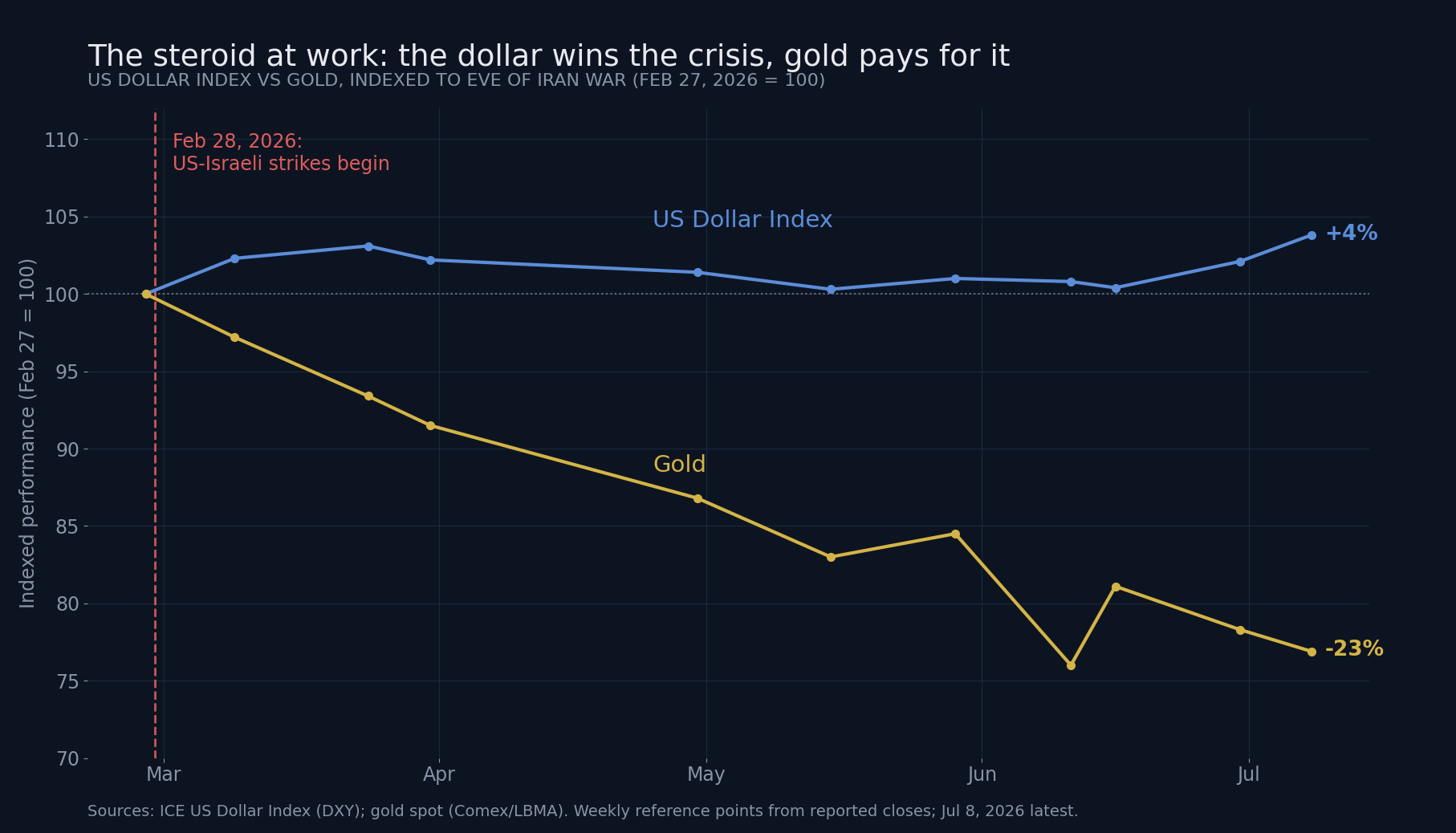
Steroid use is a common shortcut bodybuilders take to get the results they want. It works in the short term, but the negative consequences appear in the long term. This is what is going on with the US dollar right now. Since the Iran war started, the US dollar has grown stronger while competing assets, such as gold, have gotten weaker. However, this short-term strength will come at the expense of long-term pain.
With every passing day it becomes clearer that the Iran war was a colossal strategic blunder. The United States desperately wants to make peace with Iran, offering concessions far beyond what was given in previous deals (such as a lifting of sanctions). However, any attempt at peace is disrupted by America's partner in the war, Israel, attacking Iran's allies in Lebanon — most recently in June, when Israeli strikes forced the postponement of the first US-Iran talks in Switzerland. As the war continues, oil prices stay high, putting pressure on the global economy and squeezing American consumers.
What makes the Iran war a disaster beyond a battered economy, diminished global status and imminent defeat (Alasdair Macleod calls the US defeat "de facto if not de jure") is the enormous cost of the war at a time when the country can least afford it. The US currently has a debt of nearly $40 trillion and a debt-to-GDP ratio of about 123%. The war has already cost the US somewhere between $30 billion (the Pentagon's own operational tally) and $130 billion (Moody's Analytics estimate), and a peace agreement could add many times that amount — the June 17 MoU names a $300 billion reconstruction fund for Iran.
So this strength for the dollar will be short-lived. The mechanism that is making it stronger, a pointless self-destructive war, is contributing to its eventual downfall. The implication is straightforward. For long-term-minded investors, the short-term strength in the dollar is a buying opportunity, as there is a corresponding short-term weakness in gold — the ultimate beneficiary of the dollar's demise.
China Slowly Getting Stronger
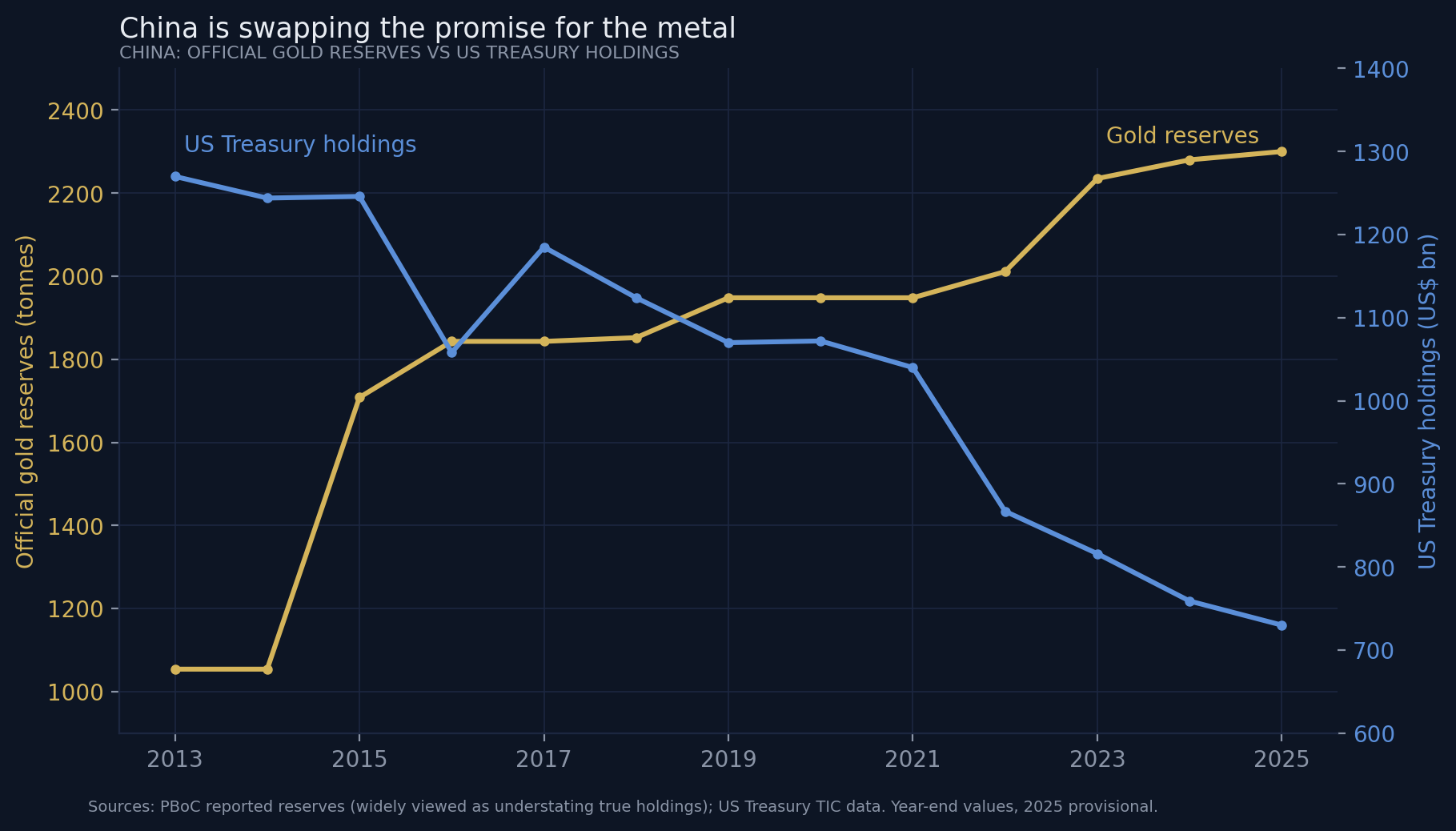
While the US is juicing the dollar, China is getting stronger the traditional way. America's share of the world's gold reserves has fallen from more than half to roughly a fifth, as Tavi Costa noted in his July 4 letter. China has gone the other direction — buying gold most months since late 2022 (Alasdair Macleod argues true state holdings are many multiples of the reported figure) while cutting its Treasury holdings from over $1.3 trillion to under $700 billion. The US stays ahead in the short term, but the dollar's future doesn't look bright.
This article is for informational and educational purposes only and does not constitute financial advice. The author is not a licensed financial advisor. Always do your own research before making investment decisions.